Case acceptance and referral conversion are different metrics. Here is what the data says about each stage of the funnel, and where the biggest losses happen.
Your practice can probably quote its case acceptance rate to the decimal. It almost certainly cannot tell you how many referrals never reached the front desk.
The industry has spent years refining case acceptance. The Levin Group's national average of 50 to 60 percent shows up in nearly every practice management article (Levin Group, 2021, via Veritas Dental Resources). Dental Intelligence publishes acceptance by dollar amount at 35 to 45 percent. PracticeNumbers grades practices average, high-performing, or exceptional. Every one of those numbers measures what happens after the patient is in the chair. None of them measures whether the patient made it to the chair at all.
Referral conversion is the metric that fills that blind spot. It starts the moment a referral leaves the GP's office and ends when treatment is accepted or declined. It is a different measurement from case acceptance, and most practices do not track it.
The question most specialist practices cannot answer
A periodontist in a four-operatory practice reviews her month. She saw 58 new patients, and she knows most came from GP referrals, because walk-in periodontal patients are rare. What she cannot say, without counting by hand, is how many referrals were sent to her office that month.
If GPs sent 90 and she saw 58, her conversion is 64 percent. If they sent 75 and she saw 58, it is 77 percent. Those describe completely different levels of referral health. One means a third of her referrals are vanishing. The other means the pipeline is working reasonably well. The referring GP knows how many they sent. The specialist knows how many showed up. The number in between is invisible unless both offices share a system that tracks it.
Case acceptance is not referral conversion
These two get conflated constantly, and the confusion matters because they diagnose different problems with different fixes.
Case acceptance measures a decision inside the operatory. The patient is in the chair, the dentist presents a plan, the patient says yes or no. Levin Group puts the general-dentistry average at 50 to 60 percent. By dollar amount, Dental Intelligence reports 35 to 45 percent. Broken out by treatment type, Veritas reports preventive care at 80 to 90 percent, basic work like fillings and crowns at 70 to 80 percent, and comprehensive procedures like implants and orthodontics at 60 to 70 percent.
Referral conversion measures a pipeline that begins in a different building. The GP decides to refer. The referral leaves. The patient gets a name and a number. Days pass. Eventually the patient calls or does not. If they call, they schedule or not. If they schedule, they show or not. If they show, case acceptance finally applies. Every one of those stages has attrition, and case acceptance captures only the last one.
The referral funnel, stage by stage
Here is what the available data says about each stage. Where published numbers exist, they are cited. Where they do not, the gap is named.
Stage 1, referral sent by the GP. The starting line. In manual systems, "sent" might mean a slip handed to the patient, a fax, or a call between front desks.
Stage 2, referral received by the specialist. Where the first losses occur. A fax to the wrong number. A slip left in the patient's car. An email in a general inbox no one watches. Attrition here is hard to quantify because neither office tracks it, but the room for loss is obvious.
Stage 3, patient contacts the specialist. The biggest drop. A 2008 study by Kelton Research found that 46 percent of dental specialist referrals went unfulfilled nationally, rising to 50 percent among patients aged 18 to 49 (Kelton Research, 2008, via DentistryIQ). DentistryIQ has reported paper-referral failure in a 30 to 40 percent range, depending on the survey. Either way, a meaningful share of referred patients never reach a scheduled appointment.
Stage 4, consultation scheduled and completed. Once the patient calls, scheduling attrition is lower. The main risks are long wait times, insurance friction, and ordinary no-shows. Dental no-show estimates vary, with 15 to 20 percent a commonly cited range.
Stage 5, treatment accepted or declined. Where traditional case acceptance takes over. For referred specialty care, acceptance tends to run higher than for elective recommendations, because the patient has already cleared several hurdles and the problem is usually acute or clearly defined.
End to end. Combining attrition at every stage, a manual pipeline likely converts at 35 to 45 percent from referral to completed treatment. A pipeline with structured digital handoffs and shared status closes a meaningful portion of that gap, though the absolute numbers vary by practice and specialty.
Where the largest losses happen
The data points to one place: between the GP's office and the specialist's phone.
The Kelton finding that 46 percent of referrals went unfulfilled is the most-cited data point in this space, and it is from 2008. The single most referenced number on dental referral completion is nearly two decades old. That gap is itself the finding. The industry has never tracked referral conversion the way it tracks case acceptance, collections, or retention.
The reasons behind the number are structural. Hand a patient a paper referral and they become the sole carrier of the information. No prompt to call. No reminder if they forget. The GP has moved on. The specialist does not know the referral exists until the patient calls.
Sixty percent of patients in the Kelton study said they would feel more comfortable if the specialist already had their case details, and 29 percent said they would appreciate a confirmation call from the specialist's office. Those preferences describe a system where the specialist receives the referral directly, with clinical context, and reaches out. That system exists now. It is what digital referral platforms do. Most referrals still do not use one.
The single most referenced number on dental referral completion is nearly two decades old. That gap is itself the finding.
What benchmarks to set
Published referral-specific benchmarks do not exist the way case acceptance benchmarks do. Levin Group does not publish a conversion number. The ADA Health Policy Institute tracks practice economics but not stage-by-stage referral data.
Drawing on the Kelton survey and broader industry coverage, here are working targets for a specialist practice using digital coordination. These are synthesis estimates, not published standards.
Referral sent to patient contact, 80 percent or higher. The manual baseline from Kelton is roughly 54 percent. Digital coordination should close much of that through immediate specialist notification and patient prompts.
Patient contact to consultation scheduled, 85 percent or higher. Once the patient calls, scheduling should be straightforward. Friction here is usually insurance or wait times, which are operations problems rather than referral problems.
Consultation scheduled to completed, 80 percent or higher, accounting for standard no-shows. Multi-touch reminder systems reduce dental no-shows meaningfully (DCM Moguls, 2026).
Completed to treatment accepted, varies by specialty. Endodontic and oral surgery acceptance tends to run high because the problem is acute. Orthodontic and periodontal acceptance vary with complexity, cost, and patient understanding.
End to end, 50 to 60 percent for a well-run specialist practice with digital coordination. That sounds modest next to 85 percent case acceptance in a top general practice. The difference is that referral conversion accounts for every stage of attrition from another office's waiting room to a completed plan.
How to measure it
A practice management system tells you who showed up. It does not tell you how many referrals were sent by GPs and never arrived. That gap is the measurement problem.
Measuring conversion at each stage requires a system both the GP and the specialist use. The GP logs the referral at the moment of decision. The specialist sees it arrive. The platform records when the patient is contacted, scheduled, completed, and whether treatment is accepted or declined. Each transition is timestamped and visible to both practices.
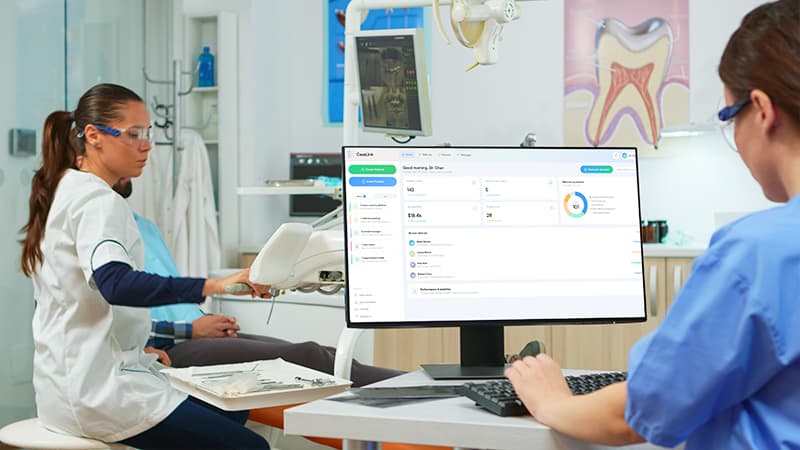
CaseLink's pipeline tracks exactly these six stages: Referral Received, Patient Outreach, Consultation Scheduled, Consultation Completed, Treatment Accepted, and Treatment Declined or Archived. The activity log and reporting show conversion at each step. A specialist can see which GPs send the most, which referrals convert, and where cases stall. A GP can see whether their patients actually received care. The GP side is free. The specialist pays $299 a month with 10 percent off annual billing. CaseLink is HIPAA aligned with end-to-end encryption and audit logging on every case.
Measuring what has always been invisible
Case acceptance earned decades of attention because it lives inside the practice, where the data is visible. Referral conversion has been neglected because it lives between practices, where no one was watching.
The data that does exist tells a clear story. A 46 percent unfulfilled rate from 2008. Vendor estimates of 60 percent manual completion. A follow-up window after which referred patients rarely act. The largest source of lost production in specialty dentistry is not in the operatory. It is in the gap between offices. Measuring conversion is the first step. Setting targets is the second. Closing the gap takes a shared system that makes every referral visible from the moment it leaves the GP's office.
Start at app.caselink.net.
Frequently asked questions
What is the difference between case acceptance and referral conversion?
Case acceptance measures whether a patient in the chair says yes to a proposed treatment, with a national average around 50 to 60 percent (Levin Group, 2021). Referral conversion measures whether a patient referred by a GP reaches the specialist's chair at all. Different metrics, different problems.
What is a good dental referral conversion rate?
Published benchmarks do not exist the way case acceptance benchmarks do. Based on available data, a working target for a practice using digital coordination is 50 to 60 percent end to end. Practices on manual systems likely convert at 35 to 45 percent. These are synthesis estimates, not industry standards.
Where do most dental referrals fail?
Between the GP's office and the specialist's phone. The 2008 Kelton study found 46 percent of specialist referrals went unfulfilled nationally. The patient receives a paper referral and never contacts the specialist. That single stage accounts for more lost cases than any other.
How can a specialist practice measure conversion?
It requires a system both offices share, so both sides of the referral are visible. CaseLink tracks each stage from Referral Received through Treatment Accepted, with reporting that shows conversion by stage and flags where cases stall.
Why do younger patients have higher referral failure rates?
The Kelton study found 50 percent of patients aged 18 to 49 disregarded specialist referrals, against 39 percent of those 50 and older. Younger patients are more likely to delay because symptoms feel less urgent, scheduling feels inconvenient, or the slip is lost before they act.
Does CaseLink work with existing practice management systems?
Yes. It works alongside Dentrix, Eaglesoft, Open Dental, and others. It handles the referral workflow between offices, a layer those systems were not built to cover, and does not replace them.