About a third of dental referrals never become treatment. Here is where they break down, what each lost case costs, and how to close the gap.
A periodontist calls fourteen referred patients on Monday. By noon she has reached seven, and three of those already booked somewhere else. Two say no one told them they were supposed to call anyone. The last two forgot.
Half the week's referrals, gone before lunch. She did nothing wrong. The GPs who sent the patients did nothing wrong. The patients were not careless. There was simply no thread connecting the two offices once the patient walked out the door, so the handoff died in the quiet between them.
That gap is the most common way dental referrals fail. Not a clinical disagreement. Not a scheduling fight. A blank space between the moment a GP writes the referral and the moment a patient sits in the specialist's chair.
Where referrals actually break down
A GP-to-specialist referral almost always runs the same way. The dentist decides to refer. The front desk writes a slip or sends a fax. The patient is told to call. The patient leaves.
After that, the lights go out. The GP cannot see whether the specialist got the referral, whether the patient called, whether a consult was booked, or whether treatment ever started. The specialist cannot see how many referrals were sent that never arrived. Three failures account for most of the loss.
The call that never happens. The patient leaves with a slip and a phone number and every intention of calling. The slip goes in a bag or a glovebox. A week later the worry has faded and the call is one more thing that did not get done.
The fax with no context. A name and a reason for referral arrive at the specialist's front desk. No images. No history. No sense of urgency. When the patient does call, they are handled like a stranger off the street instead of a warm handoff from a trusted colleague, and the whole thing feels disconnected from the visit that started it.
The follow-up that sinks. The office manager makes a note to check with the specialist in two weeks. The note gets buried under confirmations and cancellations and a full schedule. By the time anyone looks, the patient has found another provider or talked themselves out of treatment.
None of this is about effort. It is about two offices trying to coordinate around one patient with no shared place to do it.
Half the week's referrals, gone before lunch. There was simply no thread connecting the two offices once the patient walked out the door.
What a lost referral costs
Industry surveys put the dental referral failure rate at roughly 30 to 40 percent of patients who are handed a paper referral and told to call (DentistryIQ). For a practice sending 20 referrals a month, that is six to eight cases a month that never become treatment.
Run the money. At an average specialty case value around $2,500, a single GP-specialist relationship loses somewhere near $15,000 to $20,000 a month in production that was clinically indicated and already discussed with the patient. Across a year that is real operatory revenue walking out the door unmeasured.
For the specialist, the math is blunt. Every lost referral is a case that was already pointed at the practice. One additional captured referral a month is about $30,000 in annual production. Five a month is $150,000, and it comes from relationships that already exist rather than new outreach.
For the GP, the cost is quieter but just as real. A referral that fails reflects back on the person who made it. The patient was told to see a specialist. When that visit never happens, or happens badly, the patient files it under the GP who sent them. The next recommendation lands a little softer.
What a working referral looks like

A referral that survives from start to finish has four traits.
A complete handoff, where the case leaves the GP's office with patient identifiers, the clinical reason, relevant images, and the specialist already attached. A record, not a phone number on a slip.
Shared visibility, where both offices see the same timeline. When the patient calls, the status moves. When a consult is booked, both sides know. When treatment is accepted or declined, the loop closes in plain view.
Secure messaging inside the case, so when the specialist needs another radiograph or a note on a prior restoration, the request and the answer live with the patient's record instead of in an unsecured email or a game of phone tag.
Flagged follow-up, where a case with no patient response surfaces on its own. No separate spreadsheet. No reminder to call in two weeks that no one remembers.
That is a closed-loop referral. The GP sends, the specialist receives, the patient moves through defined stages, and both offices watch every step. Nothing falls into the gap because there is no gap left to fall into.
How to close it
The fix is not more phone calls or better fax machines or more disciplined staff. Front desk teams already run at capacity. Asking them to track referrals by hand across several specialists, on top of scheduling and insurance, is asking them to maintain a system built to fail quietly.
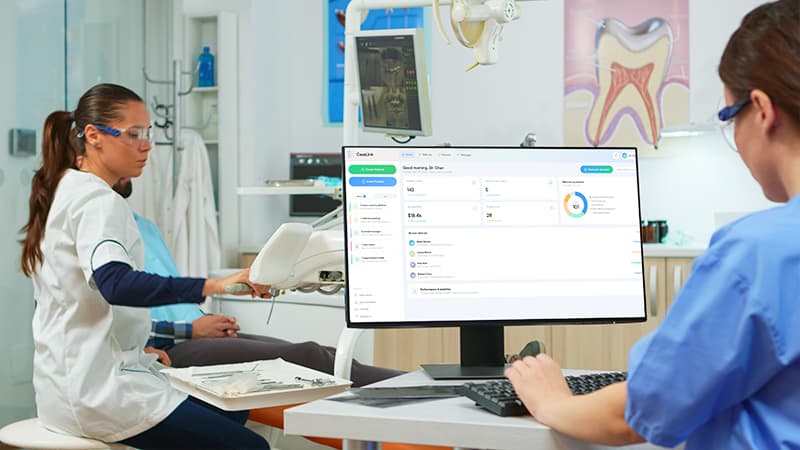
CaseLink connects the GP and the specialist around one shared case. The referral is created digitally, the specialist receives it in a structured inbox, and both offices share a timeline that runs from intake through treatment. It is HIPAA aligned, with secure messaging and file sharing inside each case and a six-stage pipeline: Referral Received, Patient Outreach, Consultation Scheduled, Consultation Completed, Treatment Accepted, and Treatment Declined or Archived. Both sides see the same stages in real time.
For general dentists, CaseLink is free. No trial, no credit card, no gate on the core workflow. The GP sends the referral, tracks it, and talks to the specialist in a shared workspace at app.caselink.net. For specialists, it is $299 a month with a 10 percent annual discount, and one recovered case usually pays for the year.
If your practice sends referrals and cannot say how many became treatment, that is not a discipline problem. It is a structural one. The referral leaves the desk and disappears into a space no one can see. Replacing that space with a shared workspace costs nothing on the GP side. Start with a free account at CaseLink.
Frequently asked questions
What percentage of dental referrals fail?
Industry surveys reported through DentistryIQ put the figure at roughly 30 to 40 percent of paper referrals where the patient is told to call the specialist. The rate moves with specialty, geography, and how the handoff is managed, but the gap between offices is the consistent driver.
Why do dental referrals fail?
Most fail because of a visibility gap. Once the referral leaves the GP, neither office shares a system to confirm the patient called, booked, or accepted treatment. The patient is left to carry the handoff alone, and many do not.
How much does a lost dental referral cost?
At an average specialty case value near $2,500, each lost referral is about $2,500 in production the specialist never sees. For a GP sending 20 referrals a month, a third going quiet adds up to roughly $180,000 a year in lost specialty production across their referral network.
What is a closed-loop referral?
A referral where both the sending GP and the receiving specialist can see every stage from send to completion. The loop closes when the outcome is recorded and visible to both offices.
Is there free referral software for general dentists?
Yes. CaseLink's GP tier is permanently free, covering referral creation, status tracking, secure messaging, and file sharing. Specialists are the paying side.
Can I use it alongside my existing practice management system?
Yes. CaseLink runs alongside Dentrix, Eaglesoft, Open Dental, and others. It handles the referral and the communication between offices. Scheduling, billing, and charting stay where they are.